Speech Problems Caused by Brain Injury Can Cause Aphasia
My uncle was an avid reader and loved playing word games. After a series of strokes, he had extreme difficulty communicating. The worst part of watching him struggle to find words was that he knew the words he did find were wrong. He was not only frustrated but humiliated, too.
The speech and language disorder that my uncle developed is called aphasia. It is common in individuals with a diagnosis of stroke, traumatic brain injury or other neurological conditions, such as Alzheimer’s disease and other forms of dementia. Aphasia is not uncommon, and, as caregivers, we must learn to help our loved ones communicate however we can.
What Is Aphasia?
The National Aphasia Association explains that aphasia is an acquired communication disorder that impairs a person’s ability to process language.
“This can impact a person’s ability to communicate and understand both the spoken and the written word,” explains Kathryn Kilpatrick, M.A., CCC/SLP, a speech-language pathologist with more than 40 years of experience, creator of Communication Connection and author of the five-volume Therapy Guides for Language and Speech Disorders workbooks.
It’s important to note that the brain’s inability to communicate is in no way connected to overall intelligence. This was the case with my uncle.
“Specific symptoms and their severity will vary, depending on the location and extent of the brain damage,” Kilpatrick says. “In some cases, a person’s symptoms may also include weakness or paralysis of their arm and/or leg.”
There are several different kinds of aphasia. Some are characterized by difficulty comprehending speech, while others are characterized by difficulty finding and producing words as well as stringing them together to form meaningful sentences. In some cases, the ability to read and/or write is also affected. Primary progressive aphasia (PPA) is one type that occurs due to neurodegenerative processes associated with Alzheimer’s disease and frontotemporal dementia.
Speech Therapy for Aphasia
When is comes to post-stroke rehabilitation and regaining skills following a brain injury, Kilpatrick stresses the importance of a person undergoing an evaluation by a speech-language pathologist (SLP) to determine not only what areas of language are affected, but also the extent of their difficulties. This helps the SLP devise a personalized rehabilitation program to maximize safety, communication and quality of life.
There are a variety of therapy techniques that can be effective in the rehabilitation of a person with difficulty speaking. For example, former U.S. Representative Gabrielle Giffords sustained a traumatic brain injury during an assassination attempt in 2011 that resulted in aphasia. One of the strategies used in her treatment program was a kind of music therapy called Melodic Intonation Therapy.
“This approach uses melody and rhythm to help patients recover words and language patterns,” Kilpatrick explains. “Each situation is unique. An experienced SLP can identify strengths and weaknesses and recommend tools and techniques to improve and adapt the way a patient communicates.”
Furthermore, Kilpatrick emphasizes that a person’s support system is an essential part of their rehabilitation team. Communication is a two-way street, so all the work does not fall solely on the patient. Part of the process involves family members and friends learning the best strategies for interacting with a loved one who has speech problems.
Many different tools are available to help people with aphasia; it just takes some effort and creativity to find the most effective solutions. For instance, one of Kilpatrick’s patients was still frustrated with her word-finding problems several years after a stroke.
“She could not spell, even though she could read words without any issues. Her therapy focused on creating a categorized list of words—including names—that she struggled with but wanted to use on a regular basis,” Kilpatrick recalls.
This personalized word list enabled her to write down her shopping lists and read a word aloud that she could not recall by referring to her personalized word list.
“For the first time in years, she was able to start addressing cards to her family by copying their addresses and even picking some appropriate personalized comments from a list created especially for her.”
Another of Kilpatrick’s clients learned how to use an iPad to type out what he wanted to say, since his speech was very difficult to understand.
Unfortunately, not every person is a candidate for speech therapy. Those with primary progressive aphasia may be able to participate in therapy sessions to help them improve or maintain their language abilities over the short term. However, PPA is caused by progressive…
Continue reading on Agingcare for more about aphasia and how you can help:
Perfect Holiday gifts!
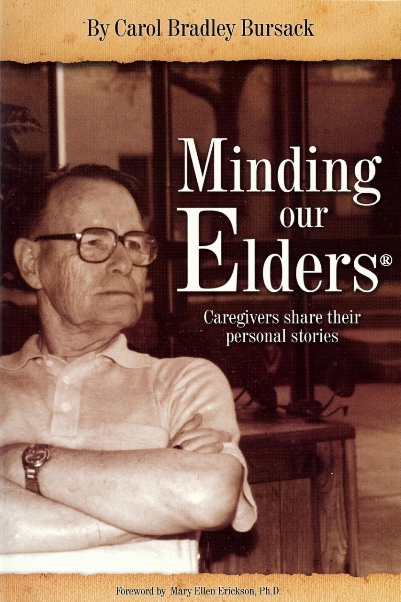
Minding Our Elders: Caregivers Share Their Personal Stories.“I hold onto your book as a life preserver and am reading it slowly on purpose…I don’t want it to end.” …Craig William Dayton, Film Composer
Stay connected with Memoryboard: Designed by caregivers. Memoryboard helps families share reminders, messages, updates, and photos on an easy-to-use screen designed for people with dementia. Peace of mind for families, independence for loved ones.
Leslie Kernisan, MD, MPH, has opened up support! View two free caregiving webinars that can help you help your older parents (and yourself).
Discover the Difference. EGOSAN: The premium incontinence brand caregivers love: They save work! Now Available on Amazon.