Breaking the News That a Loved One is Going on Hospice Care
When the paperwork was finally signed to get hospice care for my dad, I was grateful. There would now be a routine of care for him where he could live in comfort. That’s all he really wanted. However, I knew that breaking this news to Mom would be difficult. She’d have to finally admit, and somehow accept, the fact that Dad was dying. After all, hospice care is for people diagnosed as terminally ill.
A brief time after Dad’s death, Mom’s own terminal condition required hospice care in order to control her pain. She had told me numerous times that she was tired of living and ready to “go.” Yet, I believe it still was hard for her to accept that she needed hospice care and what that meant.
Our culture has historically been devoted to cure illness at all costs, and death is often looked at as “failure,” no matter the age or condition of the person being treated. Many other cultures readily accept death as part of the life cycle. I believe we, as a culture, are making progress in this direction, but death still tends to be a word people avoid. If it’s up to you to inform a loved one that he or she would be more comfortable under hospice care – or that a person they love will be on hospice care – there are steps you can take to get you through this difficult transition.
Steps to Take When Transitioning into Hospice Care
If possible, make sure the whole family is on board and understands that hospice care is palliative (comfort) care. Hospice care is not meant to cure the incurable. To be eligible for hospice care, a doctor must already have stated that the person is terminally ill with a life expectancy of six months or less.
Understand that hospice is simply care that helps a dying person live his or her last months as pain free as possible, and when possible, in a way that is meaningful to them. You and a hospice chaplain or other support person can explain to the ill person what hospice service provides. Hospice is not a “death sentence.” A person’s health can sometimes improve under hospice care. In that case, they go off the…
Helpful Tools:
Wetness indicator and alert to help manage incontinence with dignity. SenecaSense Home: Discreet Support That Restores Comfort and Confidence
Discover the Difference. EGOSAN: The premium incontinence brand caregivers love: They save work! Now Available on Amazon.
Stay connected with Memoryboard: Designed by caregivers. Memoryboard helps families share reminders, messages, updates, and photos on an easy-to-use screen designed for people with dementia. Peace of mind for families, independence for loved ones.
Leslie Kernisan, MD, MPH, has opened up support! View two free caregiving webinars that can help you help your older parents (and yourself).
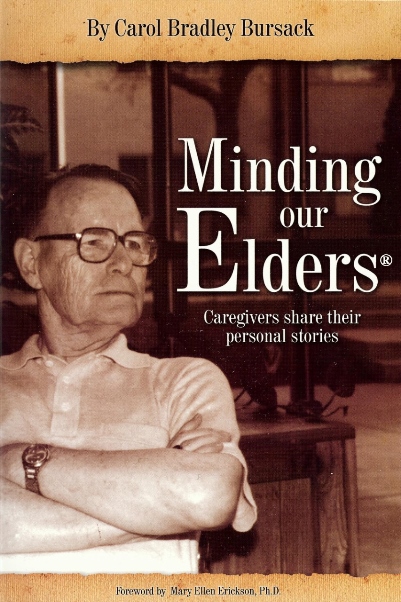
Minding Our Elders: Caregivers Share Their Personal Stories: “…This book is for all of us; let it help you cope! Thank you to the author and everyone she spoke with!” …Dolores