Home is All About Heart, Especially for Older Adults
For many of us, the word “home” signifies refuge, safety, caring and warmth –a sanctuary where we belong. It’s a place that we know is waiting for us at the end of our daily journey into the sometimes cold and uncaring world.
The actual location of our home may be dynamic rather than static—ever-changing as our personal world changes. Yet the meaning of home remains the same: a place of comfort.
Most of us who’ve cared for people with dementia have heard the sad, repetitive lament, “I want to go home.” If the person lives in a nursing home or assisted living facility, relatives naturally think that the home the elder wants to return to is the last place he or she lived before going to the care home.
More likely, at least in the case of Alzheimer’s disease, the home this elder misses is a childhood home. It’s the home where he or she felt the comfort of a mother’s arms; the safety of a father’s protection.
Again, this home is a state of mind rather than a building. Even if we could take our loved one to the actual house of his or her childhood, it’s not likely that this structure would bring comfort. A sense of comfort comes from being with other human beings who love us and will do what they can to care for us.
A comforting experiment
Loving, hands-on care, positive feedback and flexibility often help people with dementia feel less anxious and more cared for, and thus, makes them feel more at home.
I recently read of an experiment at the Parker Jewish Institute in New Hyde Park, N.Y. It began when a certified nursing assistant found that she was able to calm a person with Alzheimer’s who wandered nightly simply by inviting him to sit down with her for a cup of coffee and a snack. After his snack, the gentleman was content to get up from his chair and go back to bed.
The care home has since made it a point to provide this simple, comforting service regularly…
Discover the Difference. EGOSAN: The premium incontinence brand caregivers love – Now Available on Amazon.
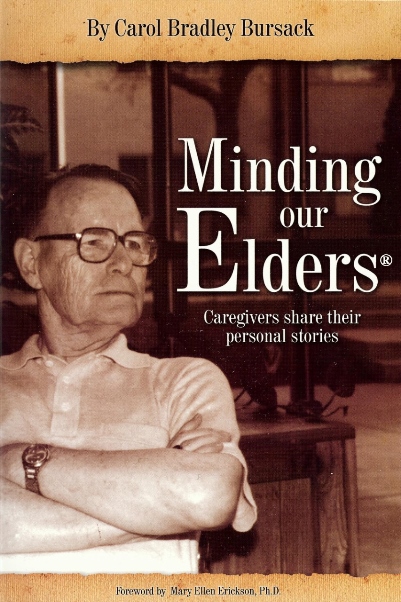
Support a caregiver or jump-start discussion in support groups with real stories – for bulk orders of Minding Our Elders e-mail Carol Minding Our Elders: Caregivers Share Their Personal Stories.
“An inspiring read for caregivers! Minding Our Elders is a series of stories about caregiving. But it is much more than that. It’s a book that helps us view aging and community through the lens of someone well versed in eldercare. Author Carol Bradley Bursack has been a caregiver for a neighbor and six elderly members of her family. These experiences made her the perfect person to interview and share the stories of friends and acquaintances. Through crisp writing and a sharp focus, we enter the lives of those struggling to care for loved ones with dementia and other age-related illnesses. As I read Minding Our Elders, I felt myself filling up with both appreciation and admiration for those who adopt the caregiving role. In addition, I was struck with the inherent value Carol sees in our elders. This is a well-written book that will stir your heart!” …Ann C