How Involved Should Families Be When Elders Live in a Senior Living Facility?
Over the course of 15 years, five of my elderly loved ones lived, for various spans of time, in a nearby nursing home. I visited them nearly every day. Some would say I was over attentive, since my elders were getting excellent care in the facility. But I tended to their specific requests that were beyond what the staff could possibly deliver, which made my elders easier for the professionals to care for.
Striking a careful balance is crucial when it comes to visits and family involvement at a long-term care facility. There is helpful participation with your loved one, and then there is involvement that borders on, or crosses over into, interference.
Can Families Get Too Involved?
I like to think that I stayed safely on the helpful side of this line. Over time, I made friends with the staff. I stayed out of their way when they were busy and refrained from taking up their time with small talk. I didn’t criticize them if I saw a problem. Instead, I asked nicely if we could make some adjustments and I listened to their suggestions and explanations. I kept my visits to an hour or so, which was just long enough to visit with each elder and make sure their needs for the day were taken care of. My presence was welcome by elders and staff alike.
However, employees would occasionally confide in me about families who “took over” during their visits to the nursing home. These visitors acted as if they owned the facility and their loved ones were the only residents who mattered. They cornered every staff member they could find and talked to them either as if they were a good neighbor who had all the time in the world or an adversary who needed constant monitoring. Neither attitude is good.
Advocacy vs. Abnoxiousness
Family caregivers naturally advocate for their loved ones’ wellbeing, and this is entirely necessary, especially for seniors who cannot fully understand or participate in their own care. However, there is a point where some family members take this responsibility to an unrealistic level.
We all want the people we love to receive the best care possible. Most families are keen on a one-to-one staff-to-resident ratio, but that is not what nursing homes and assisted living facilities provide. The nurses would tell me about visitors who spent the day roaming the halls and demanding services for their elders. I understood that they were anxious for their loved ones, but I had also learned over time about the heavy demands that are placed on nurses, CNAs and aides who work in this industry.
This facility happened to employ caring staff members who strove to provide quality care for every resident. Families must remember that other residents live there and have care needs that are sometimes more urgent than your loved one’s. Hiring a nurse or professional caregiver privately is the only way to obtain the one-on-one care that so many families seem to expect, and in fact, in many facilities this is a viable option. If you are generally happy with the atmosphere within a community but want a dedicated aide, adding a “sitter” or companion is possible if you can afford to do so.
How You Spend the Visit Is More Important Than the Length of Your Visit
Over the years, I noticed that some residents’ spouses spent most of each day at the nursing home. You might think that having a few visitors constantly lingering would be a nuisance for staff members, but in this case, it was quite the opposite. Most of these people not only helped their significant others, but they also volunteered in the dining room or pushed others…
Helpful Tools:
Wetness indicator and alert to help manage incontinence with dignity. SenecaSense Home: Discreet Support That Restores Comfort and Confidence
Discover the Difference. EGOSAN: The premium incontinence brand caregivers love: They save work! Now Available on Amazon.
Stay connected with Memoryboard: Designed by caregivers. Memoryboard helps families share reminders, messages, updates, and photos on an easy-to-use screen designed for people with dementia. Peace of mind for families, independence for loved ones.
Leslie Kernisan, MD, MPH, has opened up support! View two free caregiving webinars that can help you help your older parents (and yourself).
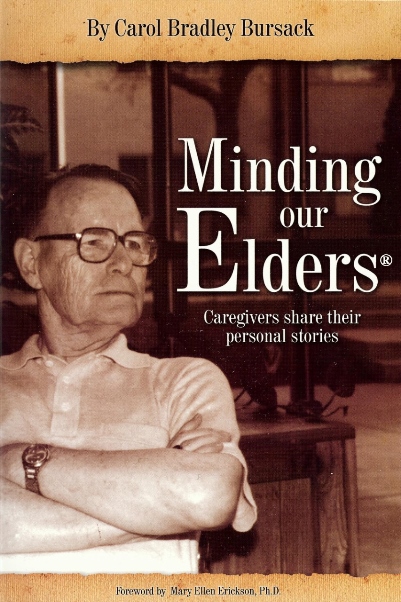
Minding Our Elders: Caregivers Share Their Personal Stories: “…This book is for all of us; let it help you cope! Thank you to the author and everyone she spoke with!” …Dolores