Kitchen Safety Concerns for People with Dementia
Sharing a kitchen with another cook can be trying for some people. Sharing a kitchen with a person who has dementia can be more than trying; it can be unsafe.
Cooking and eating are basic daily functions for us all, and since we strive to provide as normal an existence as possible to our loved ones with dementia, if you share a home, sharing the kitchen may need to be part of the experience. However, safety for everyone must be taken into account.
Since the national Alzheimer’s Association specializes in tricky issues that can have a steep learning curve for family caregivers, I contacted Ruth Drew, MS, LPC, the Director of Family and Information Services for the organization.
Drew says that taking a person-centered approach can be effective in addressing the issue of kitchen safety in the home of a person with Alzheimer’s. “Some people with Alzheimer’s are happy to be part of the action, which could mean washing dishes, helping mix cookie batter or peeling carrots,” she said.
While family caregivers already know about the personal history of their loved one, if a hired caregiver is involved, he or she should get to know the background of the person.
“Asking questions such as what the person with Alzheimer’s used to enjoy, what does this person like to do now, and what this person is capable of doing today will help guide family members and caregivers in making decisions about safety, including how a person with Alzheimer’s can continue to be active in the kitchen,” Drew said. “Depending on the level of function of the person with Alzheimer’s, you may need to take measures to ensure safety for everyone in the home.”
Drew suggests that caregivers secure knives and other sharp implements in drawers with safety locks, put toxic chemicals in cabinets with safety locks, remove knobs from stoves, position the person with Alzheimer’s away from a hot stove, lower the hot water temperature level to prevent burns, and remove throw rugs to minimize risk for falls.
Is this all worth the trouble?
It’s inconvenient and frustrating to lock up knives and other dangerous objects, but taking these extra steps to ensure safety in what could be a dangerous room is worth it. It’s far easier to take preventive measures than to cope with a mess—or worse yet, a tragedy—afterward.
What about the food safety issue?
When people have dementia, much of the learned behavior toward food safety may be forgotten. They’ll do what comes naturally. It may not have bothered you when your teenage son drank milk from the carton, but somehow seeing your mother do the same can be…
Helpful Tools:
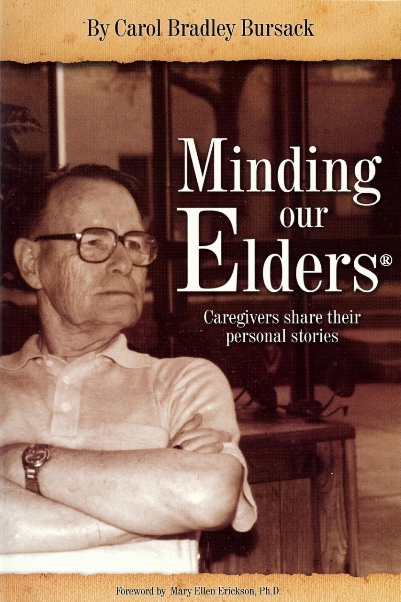
Minding Our Elders: Caregivers Share Their Personal Stories.“I hold onto your book as a life preserver and am reading it slowly on purpose…I don’t want it to end.” …Craig William Dayton, Film Composer
Stay connected with Memoryboard: Designed by caregivers. Memoryboard helps families share reminders, messages, updates, and photos on an easy-to-use screen designed for people with dementia. Peace of mind for families, independence for loved ones.
Wetness indicator and alert to help manage incontinence with dignity. SenecaSense Home: Discreet Support That Restores Comfort and Confidence
Leslie Kernisan, MD, MPH, has opened up support! View two free caregiving webinars that can help you help your older parents (and yourself).
Discover the Difference. EGOSAN: The premium incontinence brand caregivers love: They save work! Now Available on Amazon.