Am I a Caregiver? Defining the Family Caregiver Role
Many individuals struggle to accept the label of “family caregiver,” but fully embracing this role increases our chances of succeeding in it.
Over the past several decades, I’ve been a care provider for many people. Most of my care recipients were elderly, including one neighbor, an aunt, an uncle, two in-laws and two parents. Each one needed varying amounts of care across many different settings. Through it all, though, I’ve had a hard time embracing being labeled as a “caregiver.”
My experiences growing up in a multi-generational household may be one factor in why I struggled with this concept. My paternal grandmother lived with rheumatoid arthritis for most of her life, and it caused her pain and seriously limited her mobility as she got older. She eventually moved in with our family and lived with us for seven years. However, during those years, I never heard the term “caregiver” used to refer to my mother, who stayed at home to look after Grandma. She simply did what family is expected to do.
The National Library of Medicine’s resource, MedlinePlus, defines a caregiver as a person who “gives care to someone who needs help taking care of themselves.” A care recipient could need help because of an injury, a disability, a chronic illness or advancing age. This simple definition makes sense when it’s spelled out, but for so many, “caregiver” is a loaded word that evokes a wide variety of connotations and consequences in people’s minds. I have often heard family caregivers reject this label with statements like, “I’m not his caregiver; I’m his wife!” and equivalent protests from adult children who are clearly caring for their aging parents or in-laws.
Looking back, I may have benefited from acknowledging that “I am a caregiver” earlier on in my journey. But deep down, I felt that doing so might take away some of my elders’ dignity. I still struggle to reconcile this terminology with our loved ones’ desires for independence and normalcy. Nevertheless, defining our role as family caregivers is important, because it opens up vital sources of information, support and services that we may otherwise overlook.
Types of Family Caregiver Roles: There are many different kinds of relationships and situations that can evolve into a care-based dynamic. Each caregiving role comes with its own unique joys, challenges, expectations and duties. Understanding some of the more common issues associated with these roles can help family members prepare for them and continue providing care with compassion, self-awareness and tact.
Caring for a Spouse: In my experience, spousal caregivers especially struggle with how to characterize their relationships. By referring to oneself as a caregiver for a spouse, some may feel the marriage is diminished. When a marriage changes from a partnership to what is often perceived as a…
Perfect Holiday gifts!
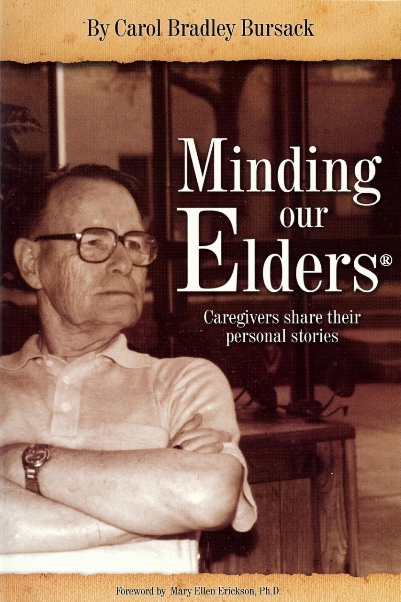
Minding Our Elders: Caregivers Share Their Personal Stories.“I hold onto your book as a life preserver and am reading it slowly on purpose…I don’t want it to end.” …Craig William Dayton, Film Composer
Leslie Kernisan, MD, MPH, has opened up support! View two free caregiving webinars that can help you help your older parents (and yourself).