Being an Effective Care Partner May Mean Stepping Back
In healthy partnerships, a relationship is built on our ability to trust that the other person has our best interests in mind. We share decisions, often compromising, so both partners feel heard and supported.
Most caregivers are already operating with some of these values in mind. Yet tweaking our mindset so that we think of ourselves as care partners can ease potential points of conflict.
Finding my footing
My neighbor, Joe, was in his early 80s when his wife died, leaving him alone in his home of many decades. Joe was unusually vulnerable due to being 100 percent deaf from Meniere’s disease. We’d had a neighborly relationship from the start, but his wife’s death is what led me to offer my help with his grocery shopping. After a time, I began to visit daily, and we grew close. To communicate, I’d write on a legal pad; then he’d read what I’d said and verbally respond. Each visit left him with several pages of conversation to review.
A partnership with healthy boundaries evolves
As Joe and I developed a (usually) easy relationship with healthy boundaries, there were lessons to learn. The first was when Joe and I had a disagreement about allowing me to take over filling his bird feeders every morning.
I understood that Joe’s being able to sit at his kitchen table while watching the birds flock to his backyard feeders was one of his daily pleasures. So, in my determination to be helpful, I told him that I’d be happy to take over what to me was his chore of getting the food from heavy bags and filling the feeders daily.
”Honey,” he said, “I do that because I want to do it.” He went on to tell me about the satisfaction he feels when he makes certain that the birds were fed. As he continued to talk, I learned how he’d watch for certain birds to return after migration, and how maddening it was that the squirrels would steal the nuts meant for the blue jays. As he talked, I saw his face light up with joy over his birds, and I finally got it. What I thought was just a kind offer to make his life easier was, to him, an attempt to take away one of his few joys.
Naturally, I worried when winter came, and I’d see him tottering out to his garage on the icy sidewalk to reach the bird’s food. That concern spurred me to renew my offer to help, but Joe pointed out how his clothesline was strung so that he could hang on as he walked. He felt perfectly safe. While I could have argued, I understood that this was something he had to do, so I’d have to step back. Of course, I kept my eye on him from a distance, but he continued to do what he loved.
Our partnership increased the enjoyment of our time together
Joe’s walk was unstable due to his Meniere’s disease and the accompanying bouts of vertigo, so we continued to have more discussions about what worried me about his safety. We clashed over him, insisting he go down to his basement to wash and dry his clothes. We clashed over him deciding that he would walk downtown (translation: visit a long-time favorite bar close to a mile away). However, over time, I learned that Joe’s life was his to live. Only he knew what kind of risk was worth taking; what gave his life meaning.
Gradually, I grew to accept that he’d do things that I could have done much faster with little or no risk because these were things that gave him a reason to get up in the morning. As Joe saw me grow, he learned to trust that my offers weren’t meant to limit his life. He understood that I just didn’t want to see him get hurt.
Years later, Joe fell while in his kitchen and broke his hip. To credit my caregiving nature, due to the emergency device I insisted he wear, he was able to alert the service, and they called me. I rode the ambulance, dealt with the medical system, then helped move him to a nearby nursing home.
Joe’s hip healed fine, but his spirit didn’t. Once he realized that he could no longer do what he loved, he simply gave up and died. His freedom of choice meant that much to him. This lesson from Joe about the value of autonomy throughout life has served me well as a caregiver and beyond.
Helpful Tools:
SenecaSense Home: Discreet Support That Restores Comfort and Confidence. Wetness indicator and alert to help manage incontinence with dignity.
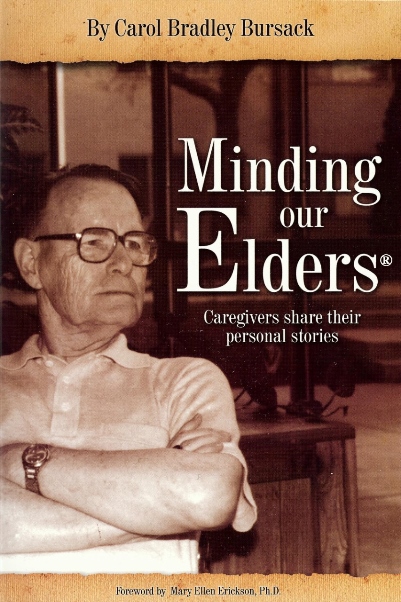
Minding Our Elders: Caregivers Share Their Personal Stories. “I hold onto your book as a life preserver and am reading it slowly on purpose…I don’t want it to end.” …Craig William Dayton, Film Composer
Stay connected with Memoryboard: Designed by caregivers. Memoryboard helps families share reminders, messages, updates, and photos on an easy-to-use screen designed for people with dementia. Peace of mind for families, independence for loved ones.
Leslie Kernisan, MD, MPH, has opened up support! View two free caregiving webinars that can help you help your older parents (and yourself).
Discover the Difference. EGOSAN: The premium incontinence brand caregivers love: They save work! Now Available on Amazon.