Should You Join Someone with Dementia in Their Reality?
It was not unlike any other day, but on this particular afternoon, Dad was adamant. He was waiting for his medical degree from the University of Minnesota and couldn’t understand why it was taking so long to arrive. So, I did what I usually did—waited a few days to see if this episode of delusional thinking would pass. It did not.
So, I used my computer to create a facsimile of a medical degree with my father’s name on it. I printed it out, scribbled some “signatures” on the bottom, put it in a mailing envelope, and brought it to the nursing home the following day. He was delighted.
I added it to the other awards and degrees already hanging on the wall of his room: a “degree” in entomology, his legitimate college degree, some other earned awards, and an “award” for helping direct Lawrence Welk’s band (another of his delusions). This wall was cluttered with both real and fake accomplishments, but I knew I would need to find room for more. Dad’s broken brain would tell him he had earned something else, and eventually, I would need to produce it.
A Dementia Patient’s History Should Play a Role in Their Care
My father had attended medical school at the University of Minnesota decades earlier, but he never finished his studies. He took some time off to be an archaeologist, and then World War II broke out. During maneuvers in the Mojave Desert, Dad had passed out from the heat, hitting his head against the baked desert floor and sustaining a closed head injury. He was in a coma for months and had to relearn how to walk and talk. Fortunately, his rehabilitation was successful. He stayed in the army until the war ended, but was kept stateside and trained as a sanitarian.
Eventually, Dad became the director of sanitation for the city of Fargo, N.D., raised a family and, like so many returning soldiers, went back to school. However, this time he studied public health instead of medicine. He attended classes at night and worked during the day. I remember going to his college graduation when I was 14 years old. Dad continued taking any graduate classes that would help his career or simply because they interested him. Education had always been important to him, and he became very successful in his field.
As Dad aged, fluid started building up behind the scar tissue in his brain. He underwent surgery to drain the fluid and prevent cognitive issues, but it backfired. He came out of the procedure in a severe stage of dementia and bonded with a voice in his head that we came to call Herman. That was when reality changed for all of us.
My father could no longer care for himself, so he moved to a wonderful nursing home a block from my house. Everyone in the family wanted to help him, but I was the only one who could…
Perfect Christmas gifts!
Stay connected with Memoryboard: Designed by caregivers. Memoryboard helps families share reminders, messages, updates, and photos on an easy-to-use screen designed for people with dementia. Peace of mind for families, independence for loved ones.
Leslie Kernisan, MD, MPH, is offering two free caregiver training webinars to people who notice that their aging parents need some help now or will in the future. Sign up now to receive the free newsletter from Better Health While Aging and, if you choose, view two great caregiving webinars that can help you help your older parents (and yourself). Or you can go directly to the trainings page.
Discover the Difference. EGOSAN: The premium incontinence brand caregivers love: They save work! Now Available on Amazon.
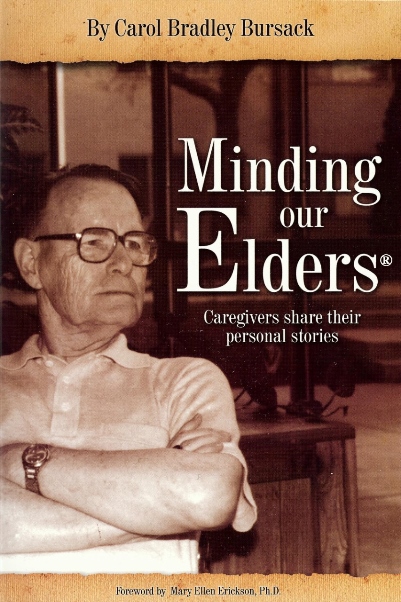
Minding Our Elders: Caregivers Share Their Personal Stories: “…This book is for all of us; let it help you cope! Thank you to the author and everyone she spoke with!” …Dolores